

Hear from Our Customers
You can’t see mold spores. You can’t always smell them. But you know something’s off—allergies that won’t quit, a musty smell in the basement, or water damage that never quite dried right.
A professional mold test tells you exactly what you’re dealing with. Not a guess. Not a maybe. Lab results that identify the type of mold, the concentration levels, and whether it’s affecting your indoor air quality.
That clarity matters when you’re trying to protect a $493,000 investment. It matters when you’re selling and the buyer’s inspector finds moisture. It matters when your kid’s asthma keeps flaring up and you can’t figure out why. You need to know if there’s a problem, how bad it is, and what to do next.
We’ve been serving Bucks County for over 27 years. We’re certified mold inspectors who understand how Pennsylvania’s cold, damp winters create the exact conditions mold loves—especially in homes built during Warminster Village’s post-WWII construction boom.
Those older homes weren’t built with modern moisture barriers. Crawl spaces, basements, and attics in this area are prone to humidity issues that most homeowners don’t notice until it’s already a problem.
We use thermal imaging, moisture meters, and air sampling to find mold you can’t see. Then we send samples to a certified lab for analysis. You get a full report with photos, moisture readings, and a clear explanation of what needs to happen next.
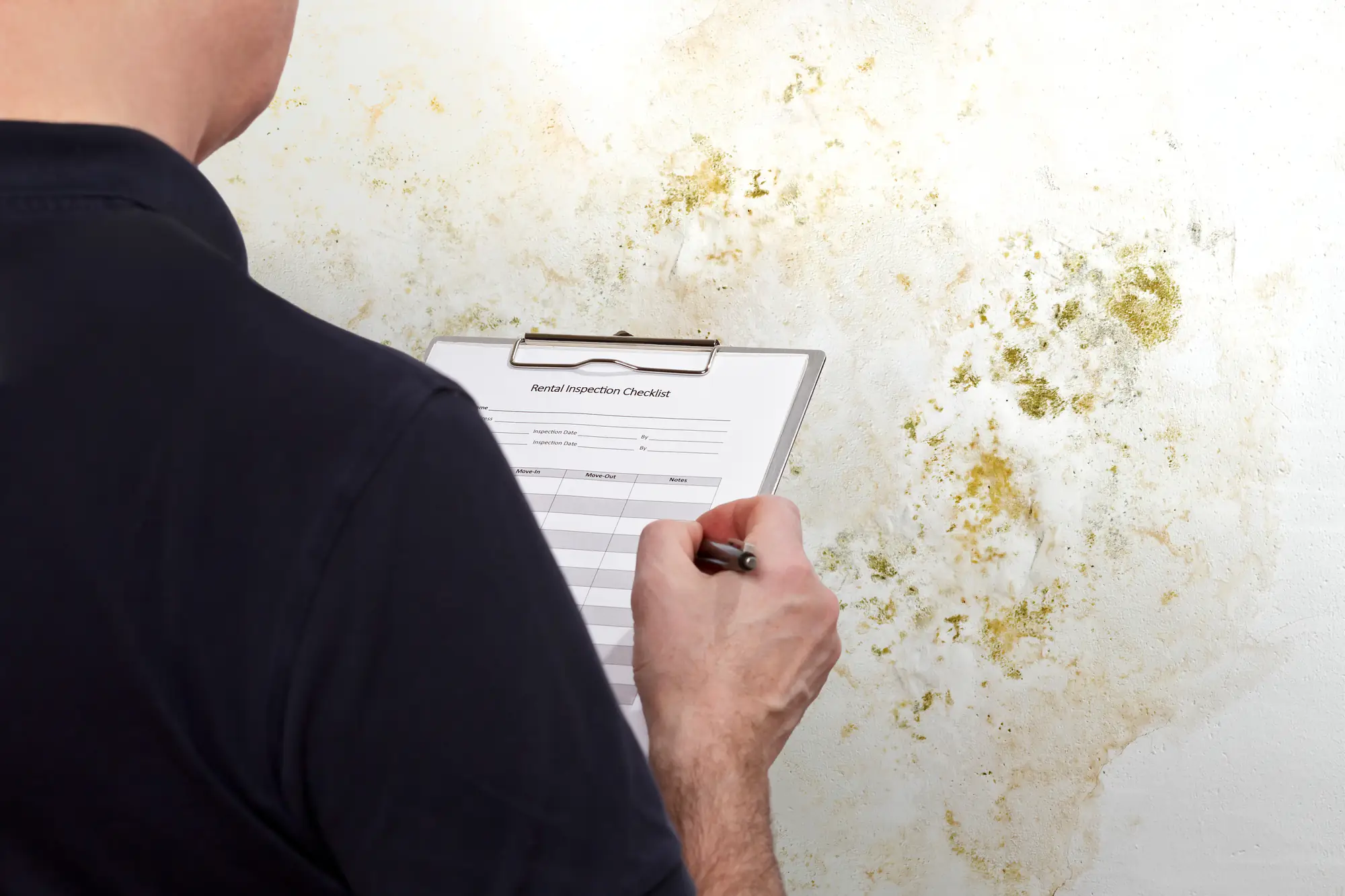
First, we walk through your home and talk about what you’ve noticed—smells, stains, past water damage, health symptoms. That conversation tells us where to look.
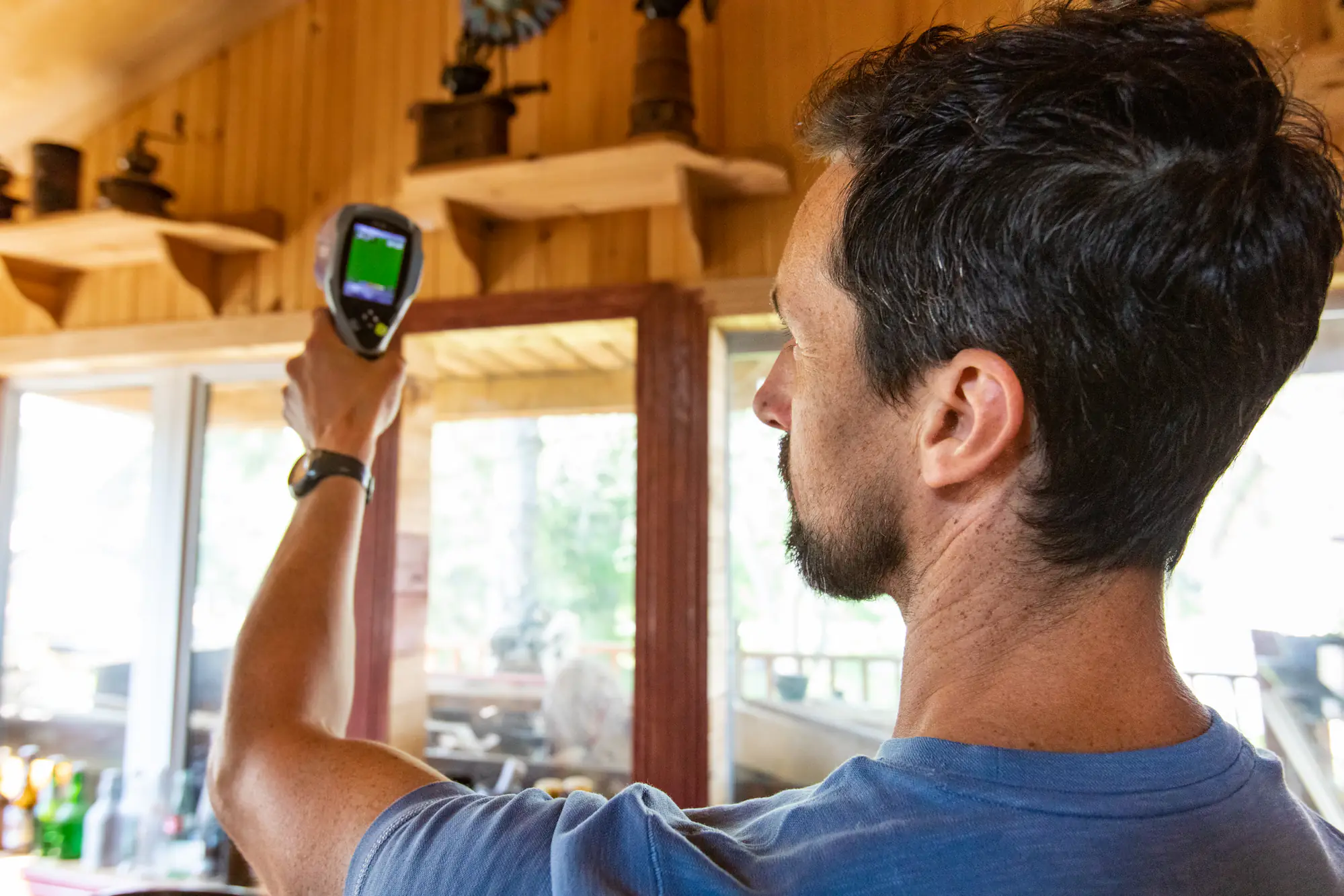
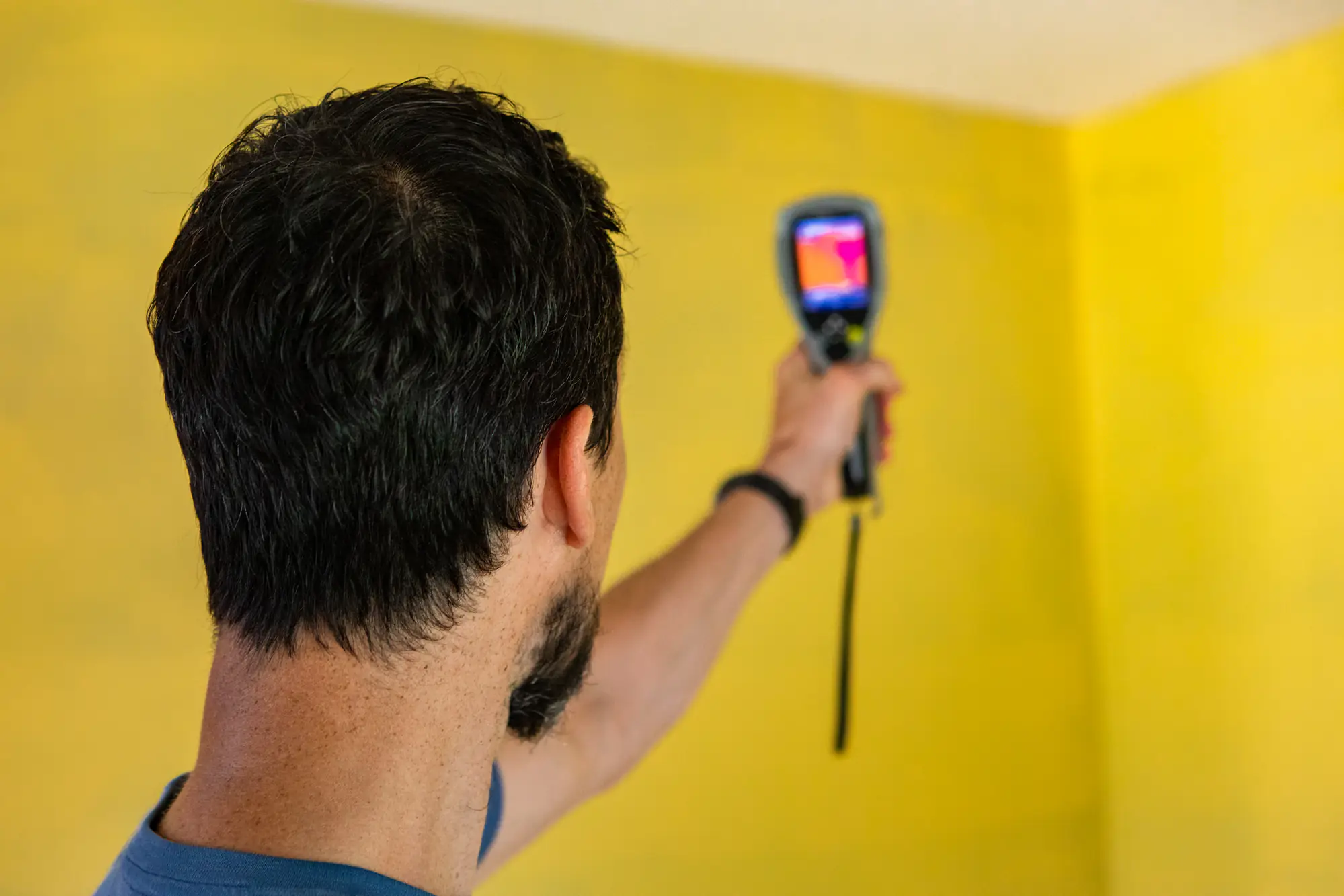
Then we inspect the usual problem areas: basements, crawl spaces, attics, bathrooms, and anywhere you’ve had leaks or flooding. We use thermal imaging to detect hidden moisture behind walls and ceilings. We measure humidity levels and take air samples from different rooms to compare spore counts.
If we find visible mold or high moisture, we collect surface samples. Everything gets sent to an independent lab for analysis. Most inspections take two to three hours depending on the size of your home.
Within a few days, you’ll get a detailed report. It includes lab results, photos, moisture readings, and our recommendations. If there’s mold, we’ll explain what type it is, whether it’s a health risk, and what remediation looks like. If there’s no mold, you’ll have documentation proving your home is clear—helpful for real estate transactions or peace of mind.
Ready to get started?
A real mold test isn’t a $10 kit from the hardware store. Those DIY tests can’t tell you what type of mold you have, how much is there, or whether it’s dangerous. They just tell you mold exists—which isn’t helpful if you’re trying to make decisions about remediation or a home sale.
Professional mold testing includes air sampling, surface sampling, moisture mapping, and thermal imaging. Air samples measure spore concentration in different rooms. Surface samples identify the species. Moisture mapping shows where water is hiding. Thermal imaging catches problems you can’t see with your eyes.
Warminster Village sits in an area where 6% of properties face flood risk over the next 30 years. Add that to older housing stock and Pennsylvania’s damp climate, and you’ve got a recipe for mold growth. Testing helps you catch it early—before it spreads through your HVAC system, before it damages drywall and framing, and before it tanks your home’s value by 20% or more.
You’ll also get documentation that holds up with insurance companies, real estate attorneys, and mortgage lenders. That matters if you’re buying, selling, or filing a claim.
Most residential mold inspections in this area run between $400 and $600, depending on the size of your home and how many samples we need to collect. That includes the on-site inspection, lab analysis, moisture readings, thermal imaging, and a full written report.
If you’re dealing with a specific area—like a basement or bathroom—the cost is usually on the lower end. Whole-home testing with multiple air and surface samples costs more, but it gives you a complete picture of your indoor air quality.
Some companies offer free inspections, but they’re often tied to remediation estimates. We charge for testing because it’s an independent assessment. You’re paying for accuracy, not a sales pitch.
A mold inspection is the visual walkthrough. We look for visible mold, check moisture levels, and use thermal imaging to find hidden problems. An inspection tells you where mold is likely growing and whether testing is necessary.
A mold test involves collecting samples—either from the air or from surfaces—and sending them to a lab. The lab identifies the species, measures concentration levels, and determines whether it’s a health risk. Testing gives you data. Inspection gives you context.
Most people need both. The inspection finds the problem areas. The test confirms what’s growing and how serious it is. If you’re buying or selling a home, lenders and attorneys usually want lab results, not just a visual assessment.
DIY kits can tell you if mold spores are present, but that’s about it. Every home has some mold spores in the air—it’s unavoidable. What matters is the type of mold and the concentration.
DIY kits can’t measure spore counts. They can’t identify species like Stachybotrys (black mold) or Aspergillus. They can’t tell you if the levels are dangerous or just normal background noise. And they don’t include moisture mapping or thermal imaging, so you’re missing half the picture.
If you’re trying to make a decision about remediation, insurance claims, or a real estate transaction, a DIY kit won’t hold up. You need lab-certified results and a professional assessment that documents the scope of the problem. That’s what buyers, lenders, and insurance companies expect to see.
The on-site inspection usually takes two to three hours for most homes. We’re checking every potential problem area—basements, crawl spaces, attics, bathrooms, and anywhere you’ve had water damage.
Lab results typically come back within three to five business days. The lab analyzes the samples, identifies the species, and measures concentration levels. Once we get the results, we put together a full report with photos, moisture readings, and our recommendations.
If you’re in a time crunch—like a real estate closing—we can request expedited lab processing. That usually cuts the turnaround to 24 to 48 hours, though it costs a bit more. Most situations don’t require a rush, but it’s an option if you need answers fast.
Sometimes. If you’re smelling something musty, dealing with unexplained allergies, or noticing condensation and humidity issues, there’s a good chance mold is growing somewhere you can’t see—inside walls, under flooring, or in your HVAC system.
Homes in Warminster Village are especially vulnerable because so many were built in the 1940s through 1960s, before modern moisture barriers and ventilation standards. Crawl spaces and basements in older homes trap humidity, and mold grows quietly until it becomes a bigger problem.
Testing is also smart if you’ve had past water damage, even if it was cleaned up. Mold can start growing within 24 to 48 hours of water exposure, and it’s not always visible right away. Air sampling can detect elevated spore counts before you see stains or smell anything. Catching it early saves you money and protects your home’s value.
First, you’ll get a clear explanation of what the lab found—species, concentration levels, and whether it’s a health concern. Not all mold is dangerous, but some types (like black mold) produce toxins that can cause respiratory issues, especially in kids and older adults.
If remediation is needed, we’ll walk you through what that looks like—containment, removal, cleaning, and fixing the moisture problem that caused it. We’ll also help you understand your options for working with your insurance company if the damage is covered.
You’ll have documentation that proves the problem and shows exactly what needs to be addressed. That’s critical if you’re selling your home, because Pennsylvania law requires disclosure of known mold issues. Having a professional report protects you legally and gives buyers confidence that the problem is being handled correctly.
Other Services we provide in Warminster Village